
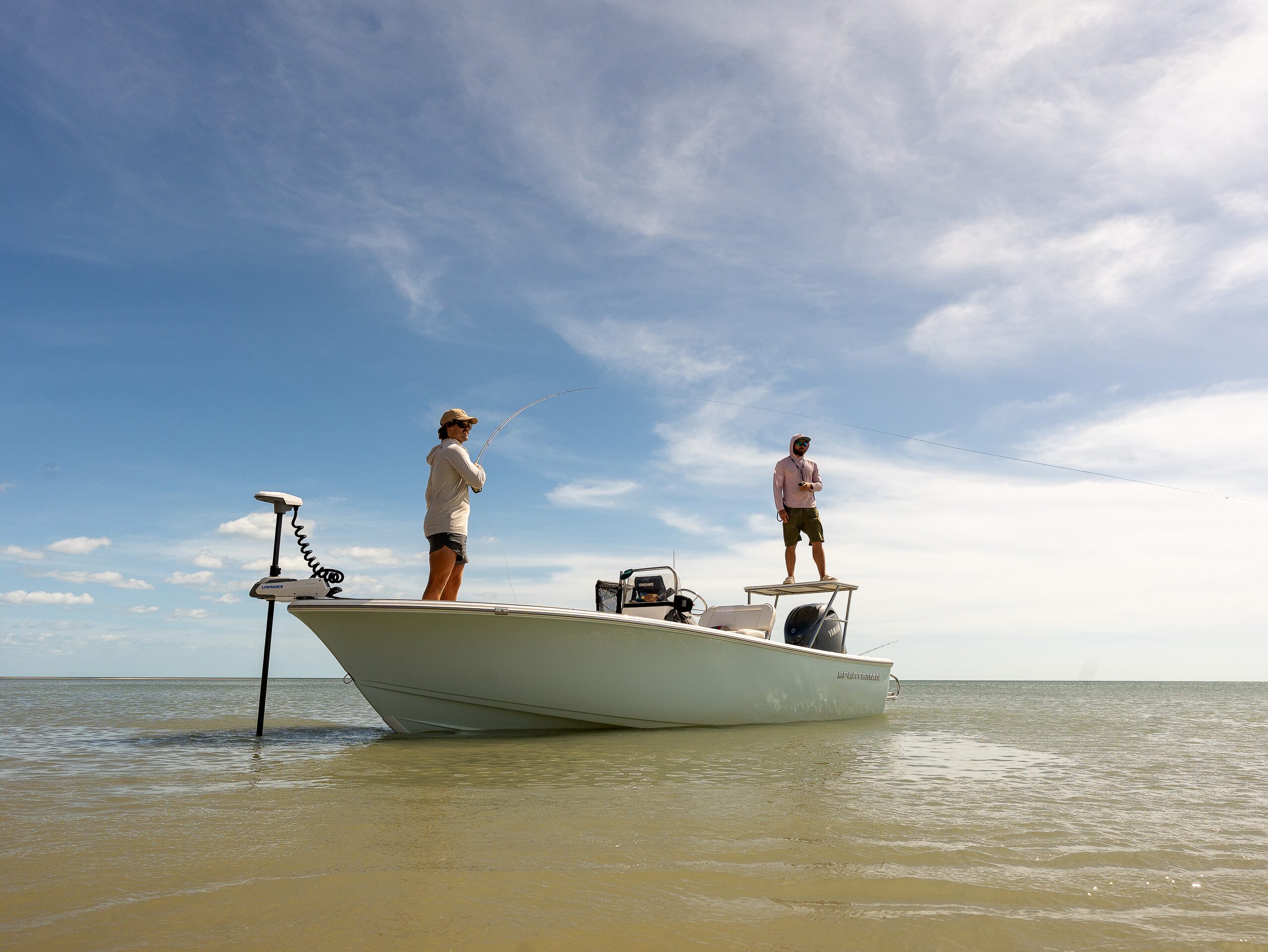
Fibreglass trailer boats have been popular with Aussie and Kiwi boaties for decades. Whether it’s for fishing or leisure, fibreglass has been a favourite material for constructing boats, and one that has stood the test of time.
Why choose ‘glass?
What’s all the fuss about? Fibreglass as a material for constructing boats dates back decades. Some of Australia’s most iconic trailer boats, cruising and flybridge game fishing boats have been made out of this material. Many of these old boats are still around. In fact, there’s been renewed interest in restoring classic fibreglass boats. I have one myself, a little fibreglass composite boat that’s over 30 years old and still going strong. However, not everyone enjoys restoring old boats. It can involve a lot of work and cost, and in the end, you still have an older boat. And with the abundance of fibreglass trailer boats on the market, which benefit from the latest technology and improved hull designs, today’s buyers have more options than ever before.
One of the reasons fibreglass works so well as a boat material is its malleability. It can be moulded into a wide range of shapes. And while we won’t get into the pros and cons and compare it to aluminium, which is also a fantastic boat material, fibreglass can be shaped very efficiently. Having the flexibility to shape the hull gives designers more scope to optimise ride and performance. Of course, advances in aluminium manufacturing have also opened up new design possibilities.
This flexibility is one of the reasons fibreglass boats often lead the charge when it comes to innovation. Performance and innovation aside, they also look great. Some of the best-looking boats on the water are built from fibreglass. They glisten and shine, which is part of their visual appeal. The technology and manufacturing processes of modern fibreglass have come a long way. We no longer have the rough gel coat finishes of the past. Today’s fibreglass boats are built to impress in both performance and looks.
Choice
Aussie and Kiwi trailer boat owners are spoilt for choice. Many local boat brands have been around for decades and have been enjoyed by generations of boat owners. There’s also no shortage of choice when it comes to size. If you’re looking for a small boat for one or two people, there are plenty of models that will suit. At the larger end of the trailer boat market, there are fibreglass boats with enclosed cabins that are capable of reaching fishing locations far offshore. And there’s everything in between.
Recent trends in fibreglass point towards larger trailer boats, with many owners gravitating towards the 6m to 7m range. These modern boats are built with variable deadrise hulls and chines for deflecting spray and maintaining stability. However, the real innovation is onboard. Step aboard a modern fibreglass boat and you’ll find a large dash capable of easily fitting a 16” sounder. Most have abundant storage, rod holders, ice boxes and bunks capable of accommodating an adult. As a result, the fibreglass boat buyer gets a boat with more versatility and one that has been designed specifically for their purpose, whether that’s fishing or family activities.
Haines Hunter’s 620 Patriot is a good example. It offers a refined and versatile package with a walk-around configuration, practical cabin, casting areas, dual livebait tanks and an open deck arrangement that gives serious fishing enthusiasts the functionality they need, while still providing the comfort and practicality required for family use. “Continuous improvement remains a fundamental part of our culture,” says John Haber, Haines Hunter Managing Director. “We have continued to refine our hull designs, construction methods, balance, ergonomics and manufacturing processes while retaining the strength, soft ride, durability and offshore capability that Haines Hunter is known for. The 620 Patriot is a very good example of where that experience and evolution have taken the brand today.”
Strength and weight
Fibreglass boats are built tough. The strength and overall weight of a fibreglass boat also help create a soft ride. The shape of the hull also contributes to ride quality. Having the right shape and angle of deadrise, combined with the weight of a quality fibreglass boat, allows it to travel smoothly through choppier water. On the flip side, while weight is advantageous for performance, it does mean you’re left with an overall heavier boat. It’s heavier for towing and handling. However, everything in boating is a compromise. The good news is, we’re spoilt for choice these days with an abundance of tow vehicles capable of towing even the heaviest trailer boat.
Low noise
This is an important factor for fishos. Fibreglass boats are quiet under way and at rest. If you’re fishing, you really don’t want to scare away the fish before your line even enters the water. Boat weight is also a factor in reducing noise, and fibreglass boats typically have less “hull slap” while at rest. This can be a big advantage in certain scenarios. When fishing estuaries and fresh water for shy fish, the level of hull slap can be noticeable and a factor in how many fish you catch.
What to look for?
The first step is understanding how you intend to use the boat. ‘Glass boats are like any others; you’ll want to decide whether you want this boat for fishing, family outings, cruising around the estuaries or staying overnight. There are fibreglass boats to suit a range of activities. Plus, there are plenty of ‘crossover’ boats that cater to more than one style of boating. Once you decide on the purpose, look for an established boat builder and inspect the boat. Look for signs of a quality build. Look behind seat cushions and under hatches. Some boat builders neglect these out-of-sight areas of the boat and this could be a reflection of the overall build quality.
Look for a boat with ample space for marine electronics and other accessories. Can you mount an electric motor, does it have enough drink holders, and does the cockpit configuration suit your needs? And importantly, the shape of the hull is relevant to its performance. Some fibreglass boats, particularly some of the old classics and a few of the new nostalgic remakes of these classic hulls, feature sharp deadrises. Having a sharp deadrise (a greater angle at the transom) creates a superior, soft ride in a bumpy sea. On the flip side, this angle can mean less stability at rest. Again, it’s a compromise. Plus, some manufacturers have designed their boats to have what they claim is the best of both worlds, with hulls designed for both smooth performance and stability at rest. Read the reviews, go for an on-water test, and ensure the performance suits your needs. Everyone has a different purpose for their boat and the only way to truly decide what’s best for you is to jump onboard and see for yourself.
Choose your ride
There’s never been a better time to own a fibreglass boat. There is an abundance of choice and an array of designs available. The technology has created boats with better performance and more features than ever before. Check out some top fibreglass boats over the following pages and enjoy the ride.
Top boats
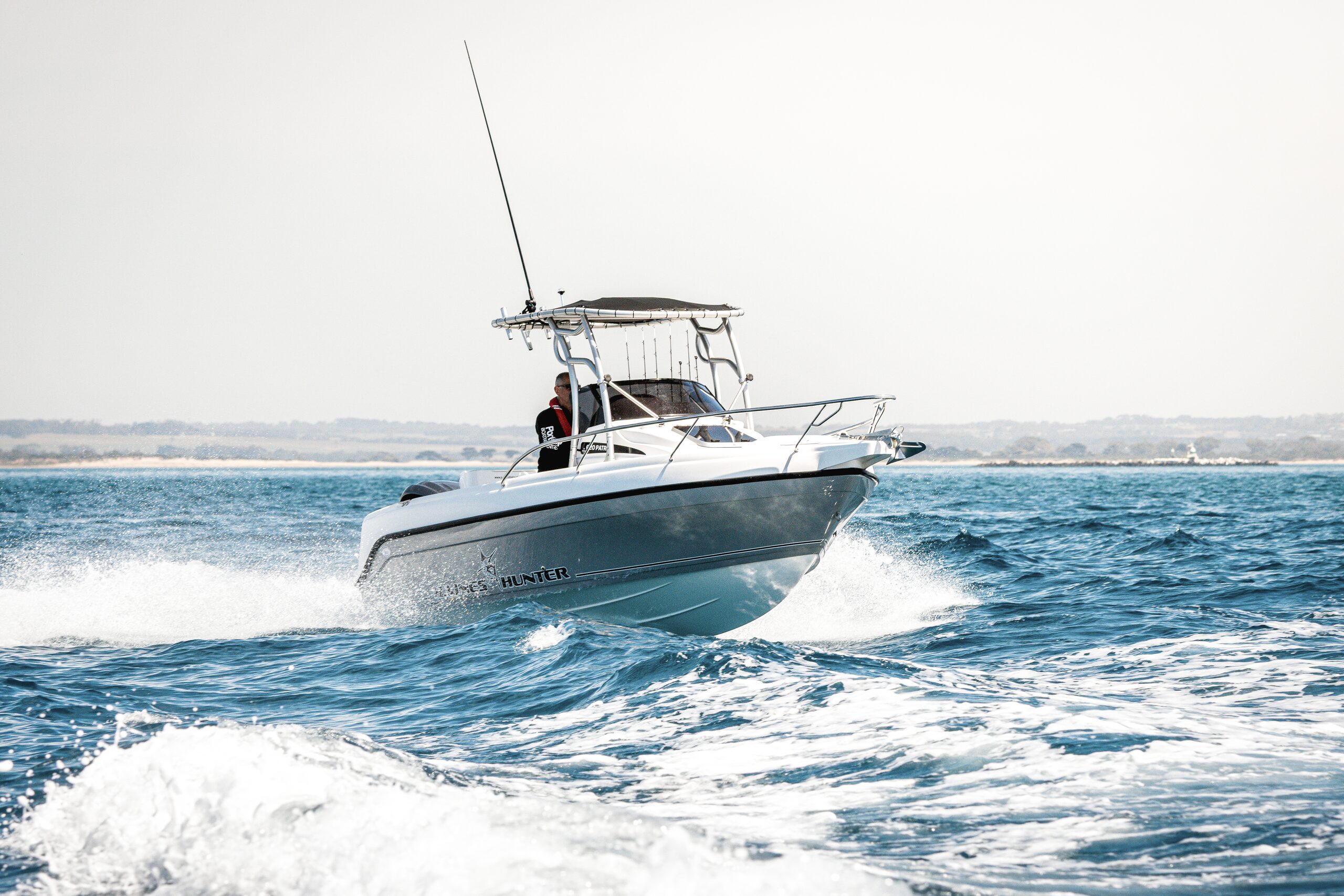
Haines Hunter is an iconic Victorian-based boat manufacturer and one of its most popular models is the 620 Patriot. I recently spent a day onboard a 620 Patriot in some less-than-ideal conditions. Coming back in, a strong wind-against-tide scenario whipped up plenty of chop. However, we were in the right boat and made it back safely and remarkably dry.
The Patriot is designed to handle challenging conditions. The 620 Patriot features a walk-around configuration with a centre console. Under the console, there’s access to a cabin with a bunk for overnight stays or storage. It strikes a balance, offering a high-performance boat with all the fishing features you need, plus walk-around access, a bunk and the comforts required for family boating. It’s also a good size. Big enough to head offshore safely and accommodate a family or a group of mates fishing, but easily towed behind a 4WD and able to fit in most driveways and larger garages.
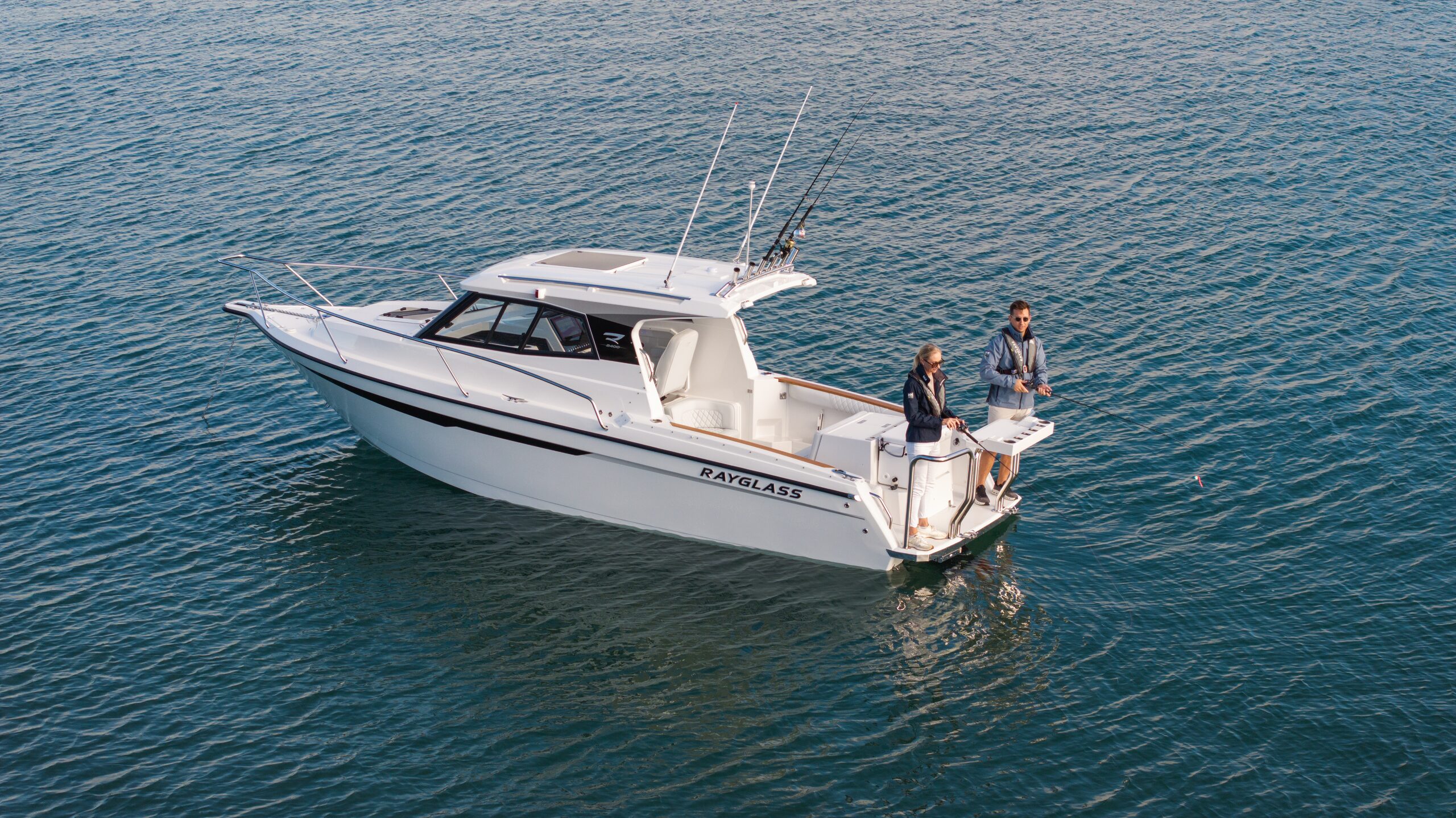
Rayglass is a well-respected New Zealand fibreglass boat manufacturer. Known for high standards of workmanship and design, the company offers a range of serious fishing and crossover boats. The latest 2400 is built, according to Rayglass, on the proven DNA of the popular 2350. The result is a boat that offers solid offshore performance while still being trailerable. The deep V hull is made to withstand choppy conditions and the compact diesel sterndrive offers long range capabilities. There are also outboard configurations available if sterndrives aren’t your preference. It is 7.7m long and comes with a wide range of features. This would make a great family and fishing boat for exploring coastal areas and for venturing further offshore chasing game fish.
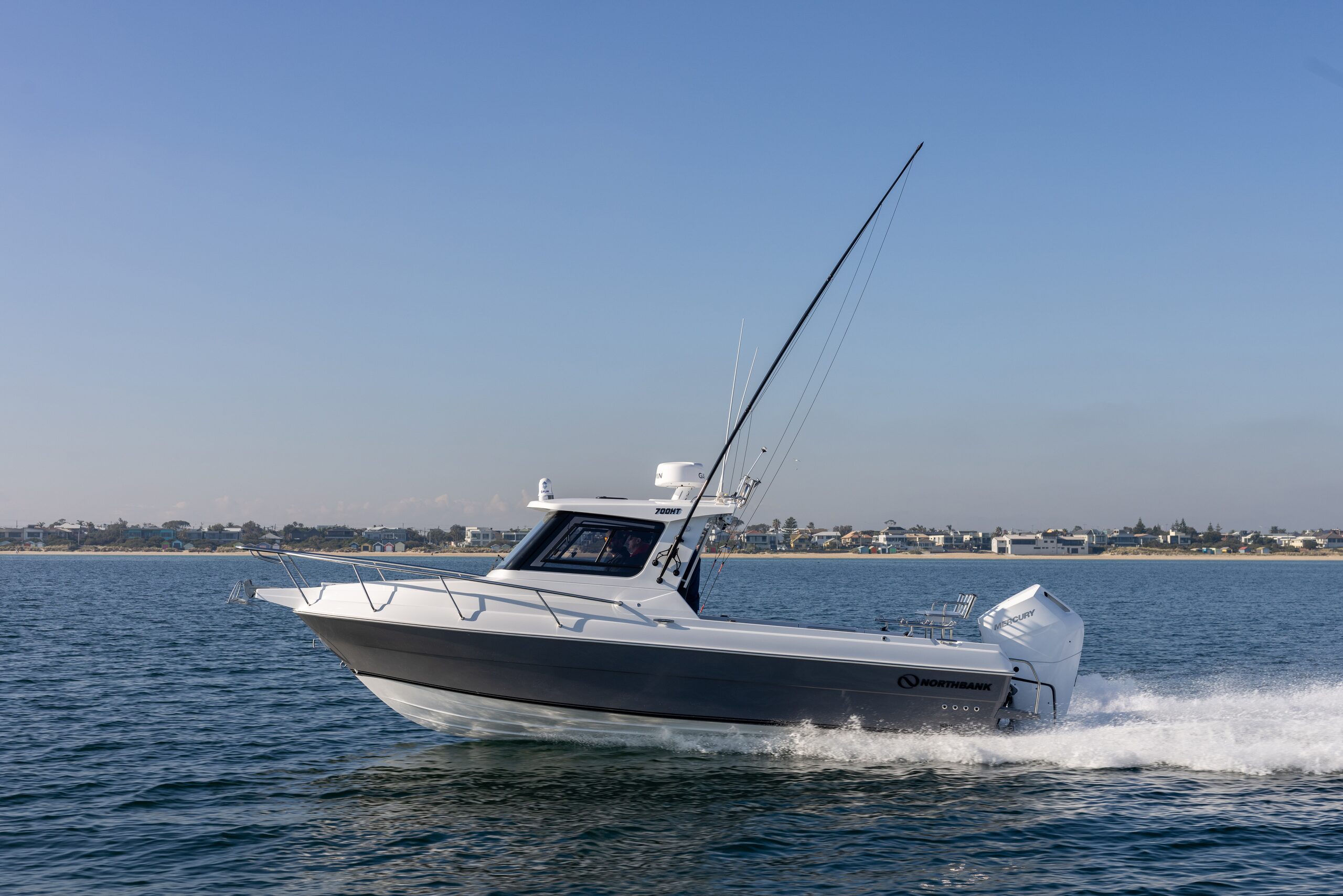
Northbank’s new 700HT is the latest addition to the brand’s highly regarded offshore fishing range, combining the proven DNA of the 650HT and 750HT into a purpose-built 7m package. Designed and built in South Australia, the 700HT features Northbank’s renowned deep-V hull with a 21-degree deadrise, delivering a soft, predictable ride and the stability needed for offshore conditions. Full-composite construction further enhances durability and performance. Measuring 7.2m in overall length, the 700HT offers generous cockpit space and a practical fishing layout without the towing demands of a larger vessel. Its 2.45m beam and enclosed hardtop provide comfort and protection from the elements, while a substantial 400l underfloor fuel tank supports extended offshore adventures. Power options include a single outboard up to 350hp or twin engines rated to 400hp.
SPORTSMAN 19 REEF CENTRE CONSOLE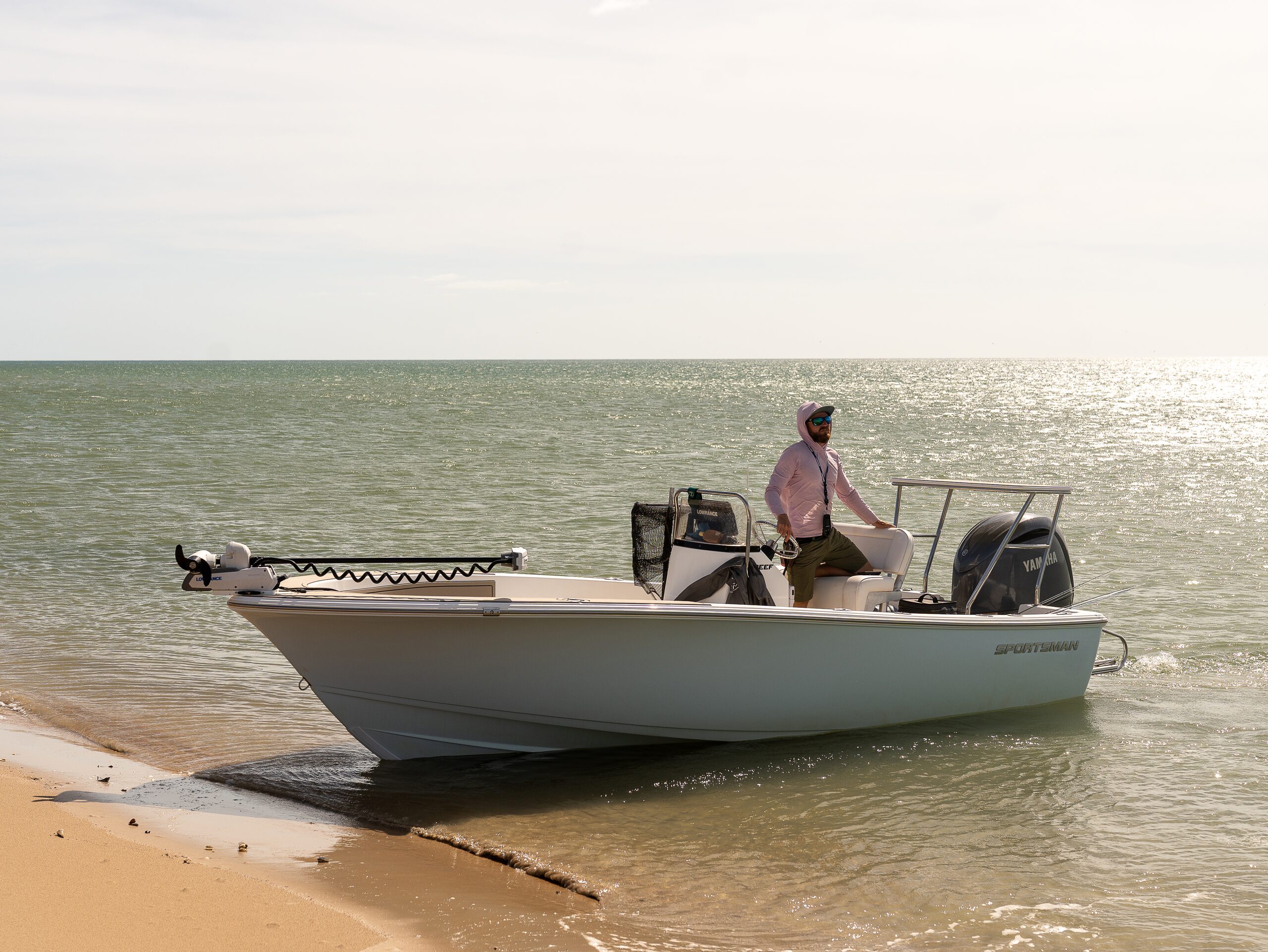
Sportsman Boats has a small range of purpose-built open centre consoles. These centre consoles are built for fishing, with an open layout that provides plenty of space for multiple anglers. The spacious console has room for a sounder and accessories, plus storage underneath. There’s also storage at the front and rear of the boat and a cushioned seat in front of the console. The 19 Reef measures 5.82m with a 2.34m beam and a 300mm draft. It has a maximum horsepower rating of 150hp. I spent a week fishing from the 19 Reef on Cape York with Aussie Fly Fisher. Well-suited to fly fishing or lure casting, the 19 Reef offers stability and clear floor space that helps prevent hang-ups.
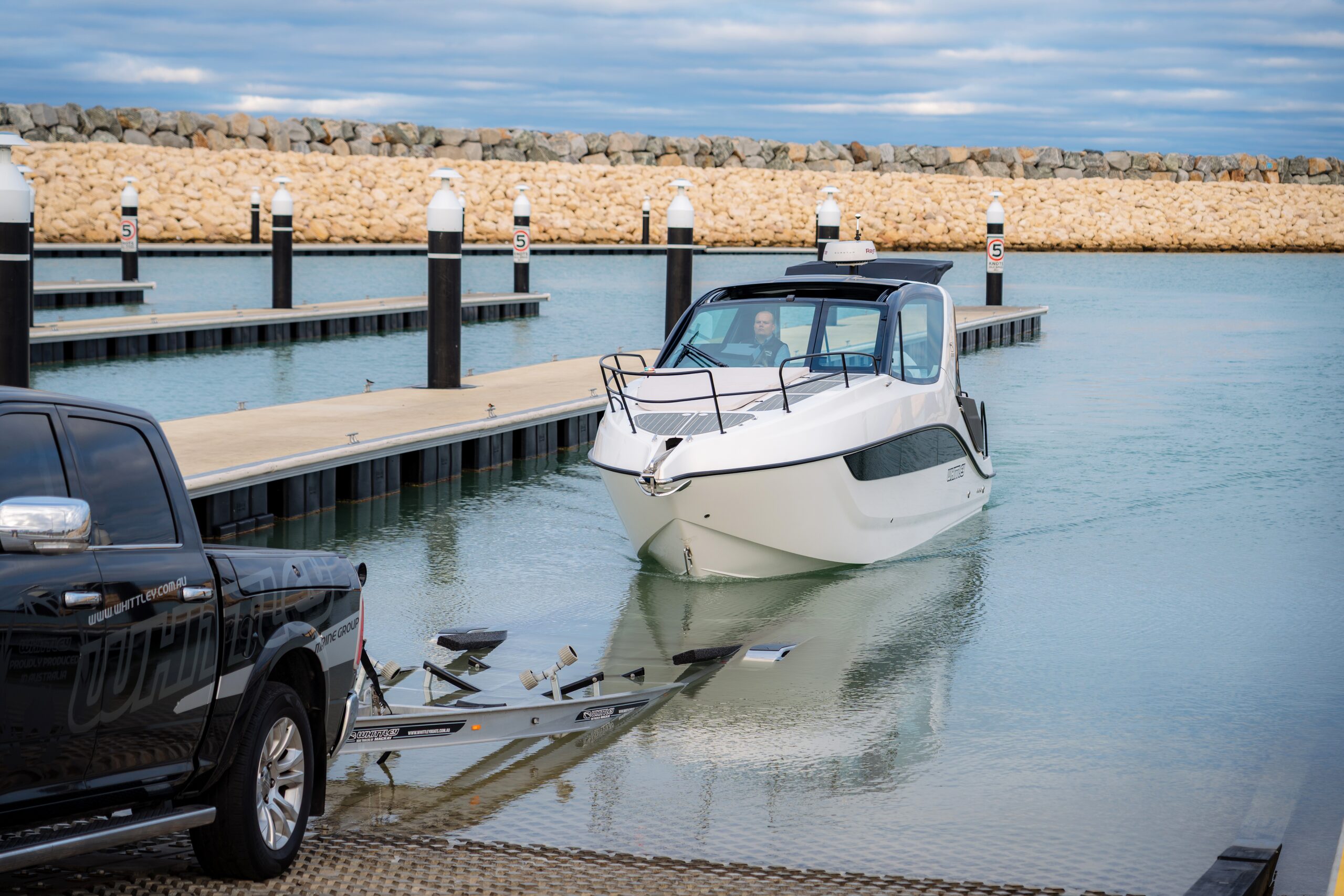
Australian boatbuilder Whittley Marine Group has released the CR 3100 OB, a great choice for boaters looking for a versatile family cruiser with ample space and comfort. The CR 3100 OB combines comfortable overnight accommodation with refined performance and the convenience of outboard power. And best of all, it’s trailerable. With an overall length of around 9.2m and a trailerable 2.5m beam, it features a generous cockpit designed for entertaining or fishing and a large rear swim platform that provides easy access to the water. Add the available outdoor barbecue and the cockpit becomes an inviting waterfront entertaining space. One of the model’s most innovative features is its lifting aft cockpit floor. With the engine positioned on the transom, the area traditionally occupied by an inboard engine has been transformed into a generous storage compartment.
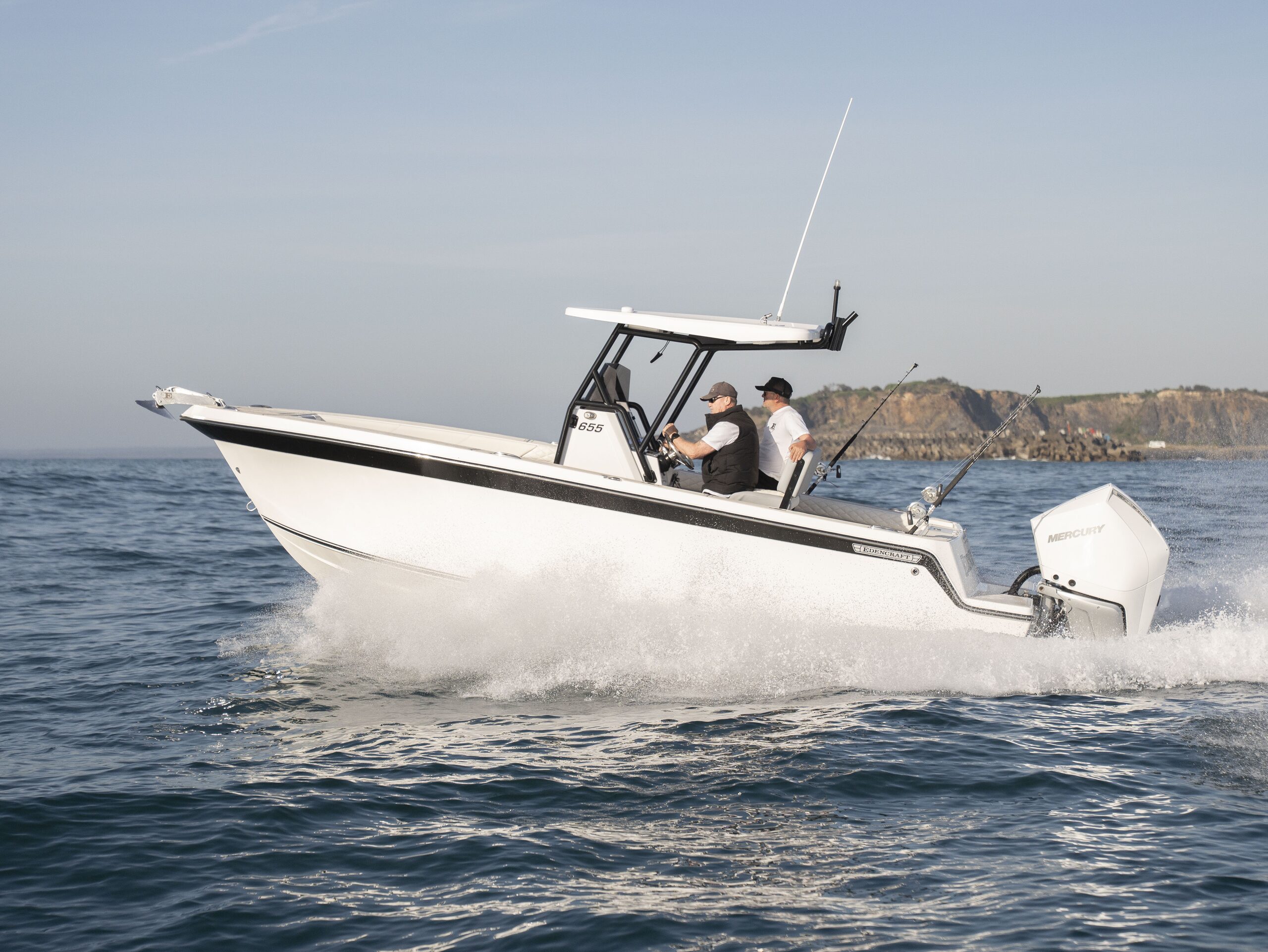
I tested Edencraft’s 655 Centre Console offshore near Coffs Harbour in NSW and found it to be a capable boat with plenty to offer serious offshore fishos. With a proven hull derived from Edencraft’s 6m range, the 655 has been redeveloped to offer 360-degree fishability, a quality build and impressive performance. Fitted with a 300hp Mercury, the 655 easily cruised at 30 knots offshore and even faster back on calm water. Stability at rest was also excellent. This would make a great boat for long runs offshore chasing game fish, thanks to a combination of proven performance, open space and practical design.
By Scott Thomas