
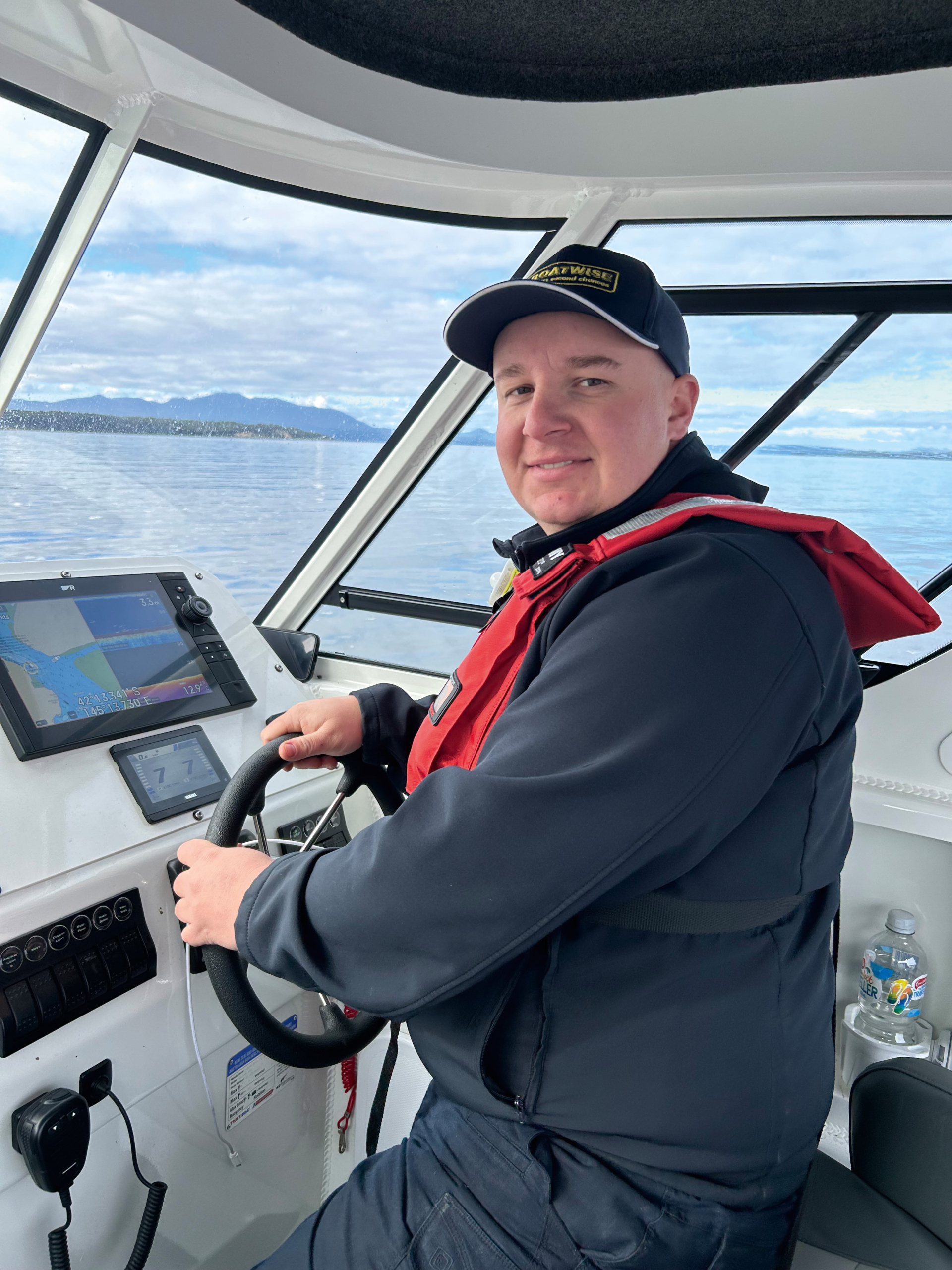
Storm Eastley, Senior Recreational Boating Safety Officer, Marine and Safety Tasmania (MAST).
Being prepared for emergency situations is about planning every trip in detail before heading out on the water. Here are five essential safety steps all boaters should take to be as safe as possible when at sea.
- Start with the vessel Most on-water emergencies begin with a mechanically related failure – running out of fuel, a battery going flat or a sudden loss of steering. These failures are, in most cases, preventable. If something looks or sounds wrong at the ramp, it will not improve offshore and a breakdown in deteriorating weather can quickly become an emergency. Before every trip, complete a pre-launch vessel check – make sure there is enough fuel on board for the trip and inspect fuel lines for cracks or leaks, check the battery charge and connections and ensure bungs are fitted. Once in the water, start the engine and make sure cooling water is flowing through the motor. Vessels must be serviced regularly and manufacturer’s schedules followed. Worn parts must always be replaced immediately and propellers inspected. And don’t forget to service trailers to make sure they are roadworthy.
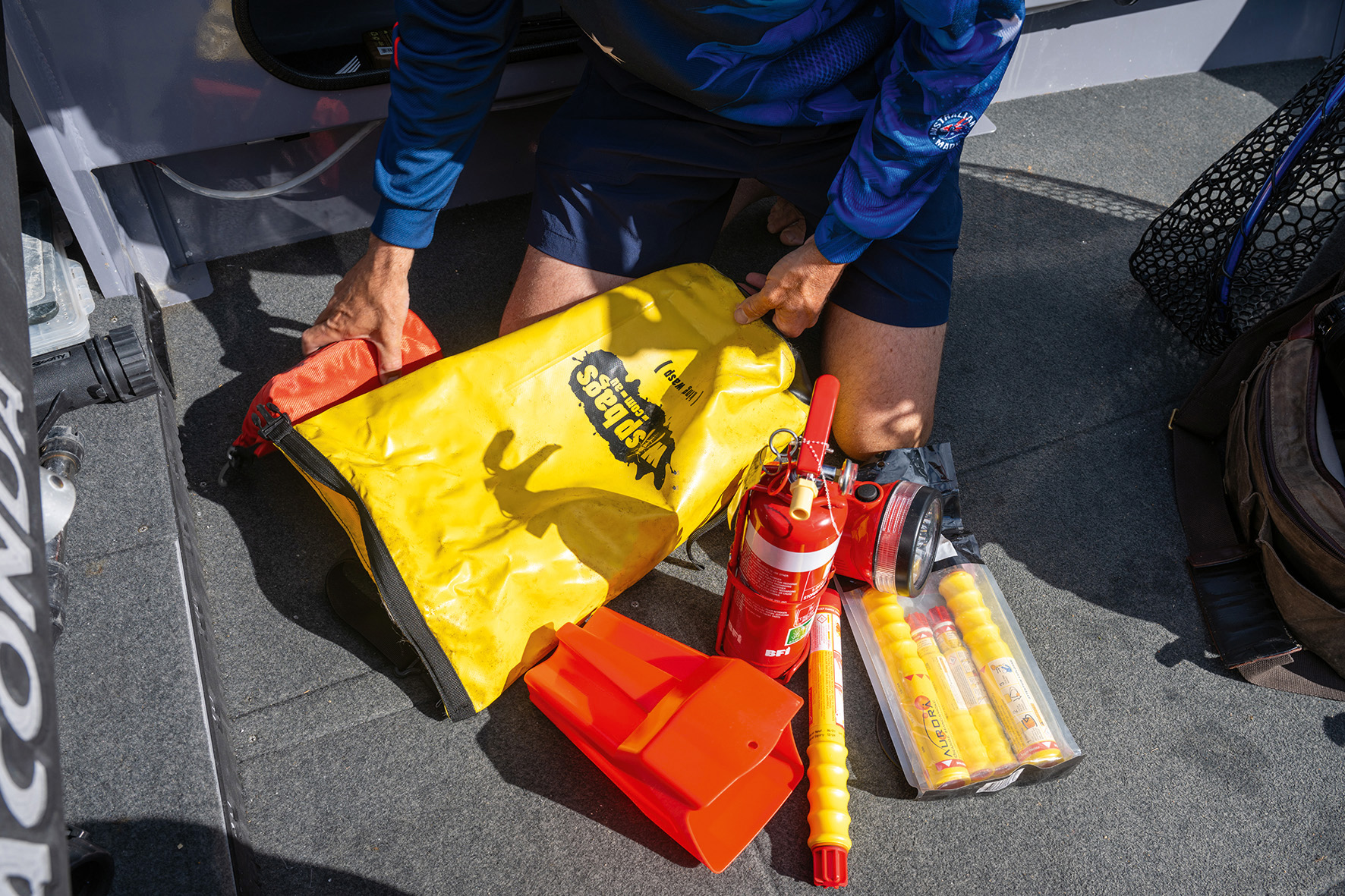
- Carry the right boating safety equipment To be as safe as possible on the water, it is essential to carry all the required safety equipment needed for specific types of vessels and for offshore or inshore boating. Essential equipment includes: appropriately sized life jackets for everyone on board, a lifebuoy, flares, EPIRBs, a radar reflector, an anchor with sufficient rope and chain for the expected water depths, an ‘in date’ fire extinguisher, a marine radio and bailers or bilge pumps that work. To be prepared for low-visibility conditions, vessels must also have correct navigation lights fitted.
Once a vessel has been checked for all the correct safety gear, operators must ask themselves one critical question, ‘Could I access all of this in 30 seconds and make a call for help if needed?’ Prepared crews respond faster, stay calmer, and make better decisions when things go wrong. Running through the 30-second challenge with all on board is a simple, effective and essential exercise. All too often, critical safety gear is buried under fishing tackle or ropes or locked away out of sight in compartments. Unless all safety gear is stored within easy reach, it cannot be easily deployed when needed most in a dynamic emergency.
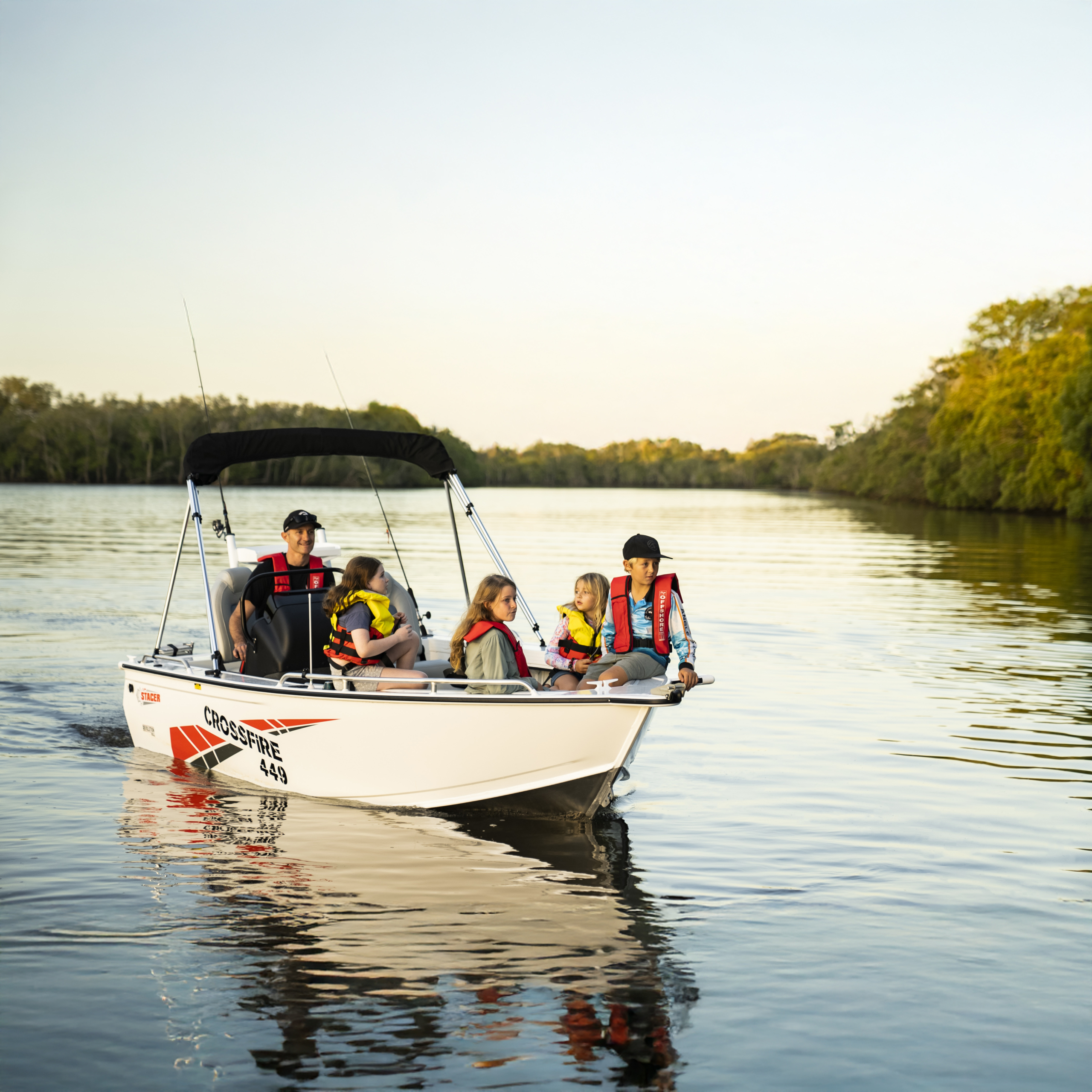
- Wear a life jacket Unexpected falls into the water happen easily and without warning for several reasons, such as a person slipping, being knocked off balance by a sudden wave or experiencing a medical episode. Wearing a properly fitted life jacket significantly increases a person’s survival time and dramatically improves their chance of being rescued.
This is an important consideration for those boating alone, children, or older people who may fatigue quickly if they find themselves in the water. Wearing a life jacket in poor condition is almost as dangerous as not wearing one at all. Just like engines, life jackets must be maintained or serviced according to the manufacturer’s instructions. Check life jackets for tears, broken buckles and worn straps and an inflatable life jacket’s CO₂ cylinder must be correctly installed and within the expiry date marked on the cylinder.
Often when a person falls into the water, cold water shock reduces breathing control almost immediately. Strength and experience do not prevent this basic human physiological response. Wearing a life jacket provides the support a person needs if they find themselves in this situation.
- Have a realistic trip and contingency plan Trip preparation starts with vessel operators knowing their limits as well as the vessel’s capability. Check the weather forecast and be aware conditions can change quickly and unexpectedly throughout the day. Offshore winds can help when heading out but are a hindrance when coming back to shore. So, account for potential additional time on the water when calculating the fuel needed.
Boat operators must always tell a responsible person what the expected departure and return times are and who is on the boat. If plans change, these need to be communicated too. Should something go wrong on the water, someone knowing these details is not just a formality, it provides emergency services with essential information.
- Carry reliable communication tools and know how to use them Both a marine radio and a mobile phone are essential for on-water safety. A marine radio is the most reliable tool offshore with VHF transmissions being monitored by other nearby vessels and maritime services, increasing the chances of a rapid response if trouble is encountered on the water.
Before heading out, always have a fully charged and operational radio within reach and monitor VHF Channel 16. Closer to shore where coverage is generally better, a mobile phone in a waterproof pouch provides a quick and familiar way to call for help. A mobile phone is a useful backup to a radio, allowing people to easily alert family, friends, or emergency services immediately.
For extra backup, all on board must know how to make a distress call on both communication devices. In an emergency, every second counts. Knowing where all the boating safety equipment is and how to use it, including knowing how to communicate, will make the difference between being helped, or potentially surviving, if something goes wrong on the water.
Visit mast.tas.gov.au
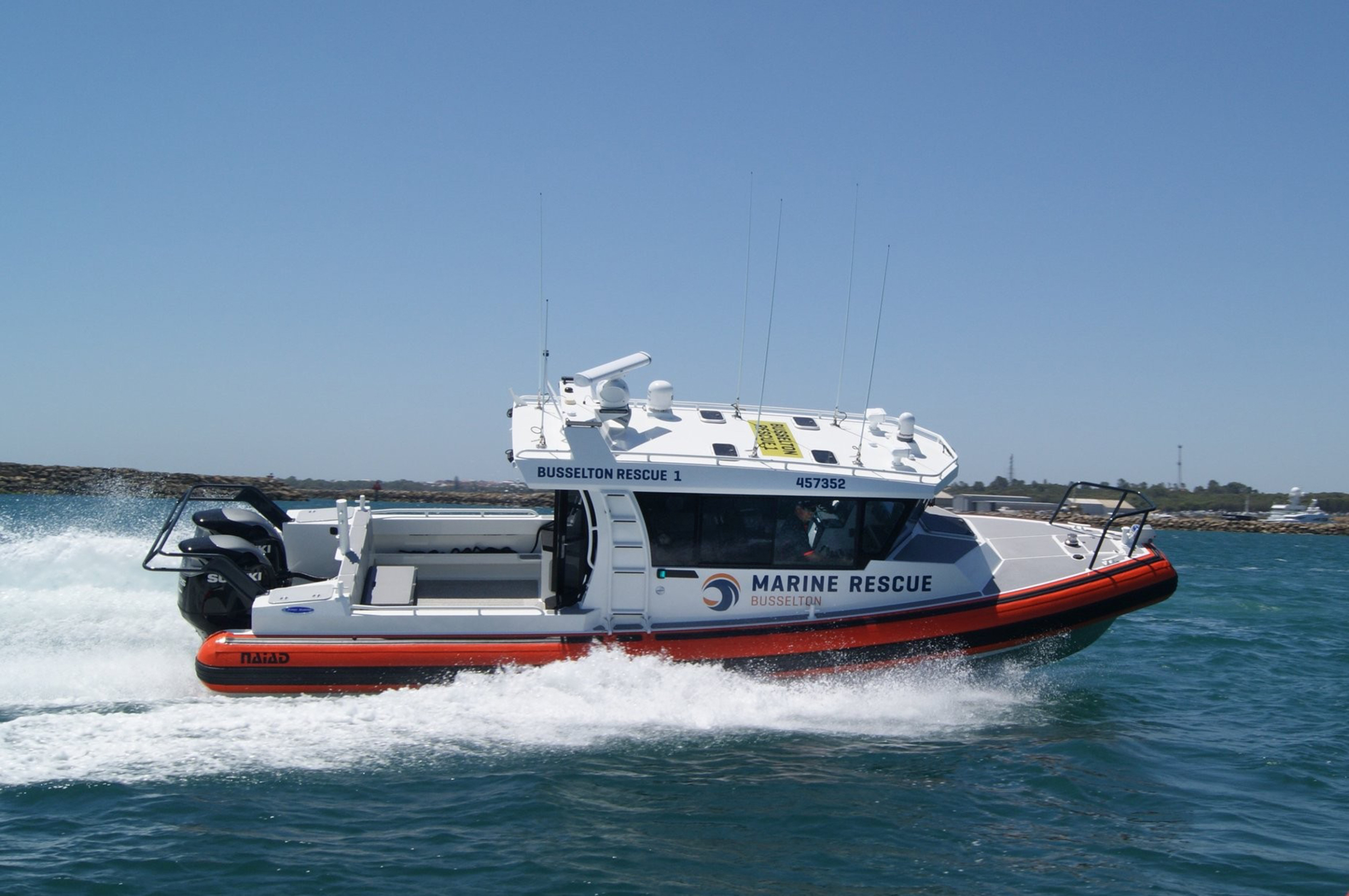
Adam Smith, President of the Boating Industry Association and Owner of Australian Boating College Sydney.
When boaters think about emergencies, offshore passages often come to mind. Yet many incidents occur much closer to home in enclosed waters such as rivers, lakes, estuaries and harbours. These areas may feel familiar, but they present their own risks, including heavy traffic, shallow water, medical emergencies, submerged hazards and limited room to manoeuvre when something goes wrong.
- One of the biggest challenges in enclosed waters is density. Busy wharves, marinas and boat ramps, and mooring areas can all have boats, PWCs, paddlers and swimmers competing for space. Add changing weather, tides and currents or reduced visibility, and situations can escalate quickly without warning. Preparation is how you can help keep these moments as manageable problems rather than escalating to becoming emergencies.
- Preparedness starts before you leave. Planning your trip, knowing what to look out for on your way, and building time and fuel margins give you options if conditions change. In enclosed waters, knowing where you can anchor, shelter or turn back is just as important as knowing your destination.
- If an incident does occur, clear communication and accurate location information are critical. Providing latitude and longitude coordinates can be difficult under stress. An increasingly useful alternative is the what3words system, which identifies precise locations using a simple three-word address. Many emergency services and marine rescue organisations can now use what3words to quickly pinpoint your position, assisting help to reach you faster.
- Preparedness also means knowing how to summon help effectively. Marine radios, phones, apps and onboard safety equipment all play a role – but only if they’re working and you know how to use them. Checking communications equipment before departure and having more than one way to call for assistance adds an important layer of resilience.
- Being prepared for a medical event or emergency on board your boat or others is a key part of your duty of care as the skipper. Even in enclosed waters, help can take significantly more time to arrive than at home or work. A suitable first aid kit and (at a minimum) some foundational skills provide confidence while assistance is on the way.
Visit abcboating.net.au and bia.org.au
Volunteer Marine Rescue WA’s Captain Colin Bairstow recaps the radio calls you need to know if you get into trouble out on the water.
How to call for help
Securite: This call is used for safety warnings when there is a risk to other vessels. This could be a risk of hitting a semi-submerged object or a drifting object like a boat or sea container. It is also where severe weather warnings are issued. It is used to raise the attention of other vessels to the call which may affect safe navigation.
Pan Pan: This call is for an urgent response if your vessel is in trouble but there’s no imminent risk of loss of life or vessel. An example would be engine failure where you are drifting close to coastal rocks or beaches. Provide the same information as a Mayday call and use the same radio channels.
Mayday: For imminent grave danger. This call is used when it is life threatening and your vessel and persons on board are in imminent danger of sinking or loss of life. Your first Mayday call should be on VHF marine radio Channel 16. This is a ground wave signal that doesn’t go through a repeater. This will alert any vessels close by that can render immediate help, usually within 15 miles or less. If there is no response on Channel 16, go to your local repeater channel and repeat your Mayday call. Always state your location, the nature of your incident and the number of persons on board.
EPIRB: Setting off your EPIRB is your last step when all else has failed, when there are no radio communications and no other method to raise the alarm, especially if your vessel has sunk.